Rath Yatra 2026 | রথযাত্রা ২০২৬

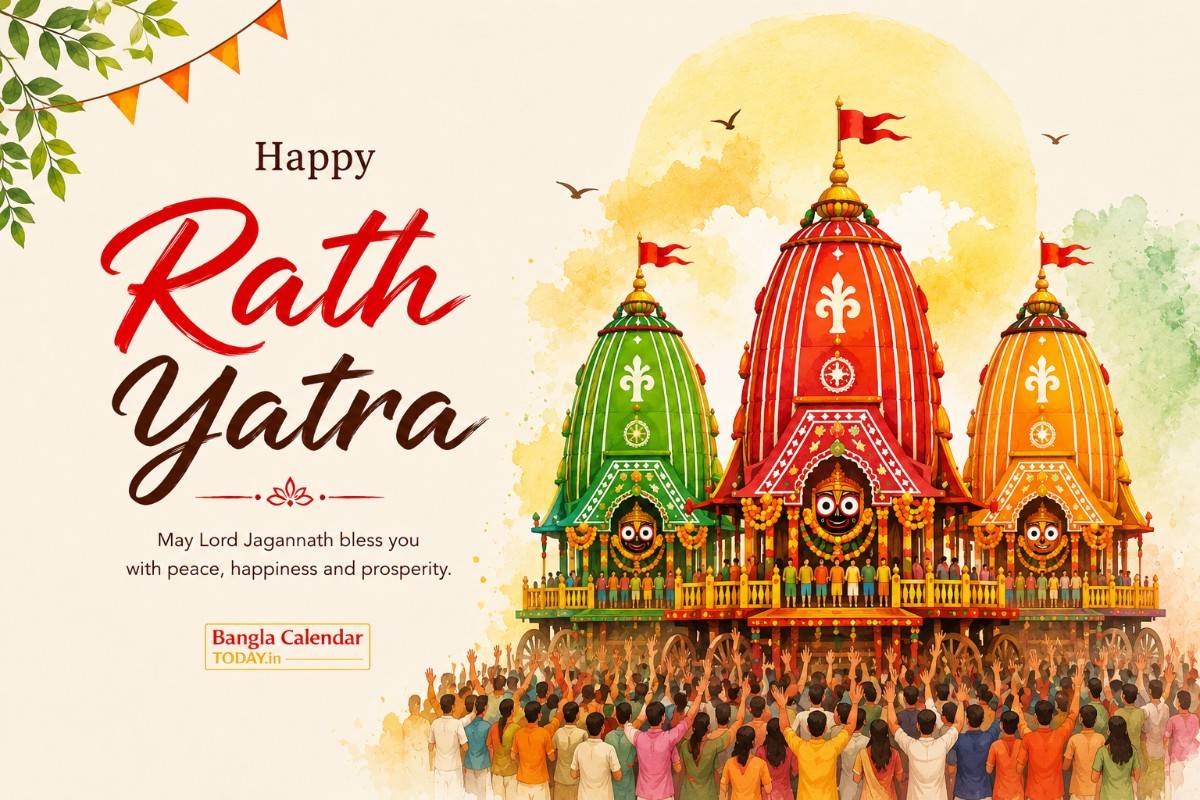
Rath Yatra 2026 - Lord Jagannath chariot procession during Puri Ratha Jatra with massive wooden chariots and devotees

Looking for calendar views and tithis?

Read more about the exact tithi timings and planetary alignments in our comprehensive July 2026 Calendar.

View July Calendar →

About Rath Yatra(উৎসব পরিচিতি)

There's something about Ratha Jatra that gets under your skin in the best way possible. Maybe it's the first rumble of the drums you hear from two streets away. Maybe it's that unmistakable smell of incense mixed with monsoon rain and freshly fried Jalebis from the mela stall at the corner. Whatever it is, the moment those giant wooden wheels start turning, something shifts inside you.

In 2026, the grand Rath Yatra starts on Thursday, July 16, 2026, which corresponds to 1 Shravan 1433 (১ শ্রাবণ ১৪৩৩) in the traditional Bengali calendar (Bangabda). On this auspicious day, Lord Jagannath, along with his elder brother Balabhadra and sister Subhadra, leaves the main temple sanctum to begin their annual nine-day sojourn to the Gundicha Temple (their aunt's house). The festival concludes with the Return Rath Yatra (Bahuda Yatra or Ulto Rath) on Friday, July 24, 2026, followed by the dazzling gold attire ritual, Suna Besha, on Saturday, July 25, 2026, and the final entry back into the temple sanctum, Niladri Bijay, on Monday, July 27, 2026.

This makes the full timeline of the Rath Yatra 2026 start date and end date span from July 16 to July 27, 2026. For Bengalis, Ratha Jatra is deeply personal. Whether it's the massive ISKCON procession drawing lakhs of devotees on the streets of Kolkata, the historical chariot pulling at Mahesh in Serampore, or children decorating small clay chariots to pull through local lanes, the festival represents a beautiful blend of spiritual devotion and shared cultural celebration.

History: While the centuries-old Jagannath Temple in Puri is the birthplace of this grand chariot festival, the history of Rath Yatra has branched out beautifully across Eastern India. In Bengal, the story belongs to Mahesh in Serampore, Hooghly district, where the state's oldest chariot festival has run continuously since 1396 CE. It was established by the Bengali sage Drubananda Brahmachari after a divine dream and later visited by Sri Chaitanya Mahaprabhu, who was so moved by the devotion here that he named Mahesh 'Naba Nilachal' (New Puri). Today, the massive 50-foot iron chariot in Mahesh is the second oldest in the world.

Further west in Jharkhand, Ranchi's historic Jagannathpur Temple in Dhurwa, built in 1691 by King Ani Nath Shahdeo of the Nagvanshi dynasty, holds a similarly rich heritage. The temple, built on a hilltop resembling the Puri temple structure, has hosted a massive Rath Yatra and an associated tribal-cultural mela for over three centuries, drawing devotees from across the region to pull the sacred chariots.

In Kolkata, the ISKCON Rath Yatra, initiated in 1972 by A.C. Bhaktivedanta Swami Prabhupada, has grown into a major cultural landmark. The procession, starting from the Albert Road temple, winds through major arteries of the city, bringing together people of all backgrounds. The history of Rath Yatra is a testament to how a localized temple ritual in Odisha evolved into a democratic, mass festival celebrated with equal fervor in metropolitan Kolkata, historical Mahesh, and the plateau of Ranchi.

Significance: Under the Odia Calendar (and the traditional Puri temple panji), Ratha Jatra is observed on the Dwitiya Tithi (second day) of the bright fortnight (Shukla Paksha) in the month of Ashadha. In 2026, the Ashadha Shukla Dwitiya Tithi begins on July 15 and remains in effect through the morning of July 16, marking Thursday, July 16, 2026, as the official day for the chariot pulling to begin.
Key Dates for Rath Yatra 2026. The 9-day event includes major milestones throughout July 2026:
  • Rath Yatra (Chariot Pulling begins): Thursday, July 16, 2026
  • Bahuda Yatra (Return Journey / Return Rath Yatra): Friday, July 24, 2026
  • Suna Besha (Golden Attire): Saturday, July 25, 2026
  • Niladri Bijay (Return to Main Temple / Final End Date): Monday, July 27, 2026
How to Follow & Participate:
  • Live Broadcast: For live television broadcasts of the Rath Jatra and Snana Jatra rituals, you can tune into regional state channels like OdishaTV.
  • Local Celebrations: If you cannot make it to Puri, many ISKCON temples and local Jagannath societies globally host their own chariot festivals. You can check for event schedules with local chapters like ISKCON Bangalore.
  • Travel Planning: If you are planning a trip to Puri, keep an eye on travel restrictions and local accommodations by consulting official tourism updates via the Odisha Tourism portal.

Rituals & How to Celebrate

Snana Yatra (June 29): The deities are bathed ceremonially with 108 pitchers of sacred Suna Kua water — after which they enter a quiet 14-day recovery period.
Anasara (June 30 to July 14): The sanctum is closed. Devotees use this waiting period for fasting, prayers, and quiet reflection.
Netra Utsav: Two days before the Rath, the deities 'reappear' — freshly painted, radiant, youthful. This is the Navayauvan Darshan.
Pahandi Bije: The deities are brought from the temple to their chariots in a slow, swaying ceremonial walk — devotees consider merely watching this to be a blessing.
Chhera Pahanra: The Gajapati King of Puri sweeps the chariot floor with a gold-handled broom. The king of a kingdom bowing before the Lord — this ritual makes the point that no one is above devotion.
Chariot Pulling: Thousands of people pull the three chariots by hand along the Grand Avenue (Bada Danda). Even a single tug on the rope is said to be auspicious.
Bahuda Yatra / Ulto Rath (July 24): The return journey. The chariots pause at the Mausi Maa Temple for Poda Pitha.
Suna Besha: Back home, the deities are dressed in solid gold ornaments — a spectacular ritual that only a handful of festivals in the world can match.

Traditional Foods & Bhog

Papad Bhaja — the unofficial food of Rath Yatra in Bengal. Hot, crunchy, and best eaten standing at a mela stall.
Jalebi — fresh, orange, and dripping with syrup. Non-negotiable.
Khichuri Bhog — the kind of simple, fragrant yellow lentil rice that tastes like devotion.
Poda Pitha — a baked rice and jaggery cake traditionally offered to the Lord during Bahuda Yatra.
Malpua — soft, syrup-soaked pancakes. Found at most Rath-er Mela stalls across Bengal.
Labra — the mixed vegetable dish that appears as prasad in most homes on this day.

Festival Calendar

Jul16

Rath Yatra

শ্রাবণরথযাত্রা ২০২৬

Thu

Frequently Asked Questions

Quick Info

FestivalRath Yatra
Date16 July 2026
DayThursday
Tithiচতুর্দশী
Bangla Date১ শ্রাবণ ১৪৩৩
Pakshaকৃষ্ণপক্ষ

Panjika Details

Sunrise5:15 AM
Sunset6:25 PM
Nakshatraধনিষ্ঠা
Yogaশূল
Karanaবণিজ