
Raksha Bandhan 2026 (Rakhi Purnima) | রাখিবন্ধন ২০২৬
Looking for calendar views and tithis?
Read more about the exact tithi timings and planetary alignments in our comprehensive August 2026 Calendar.
About Raksha Bandhan (Rakhi Purnima)(উৎসব পরিচিতি)
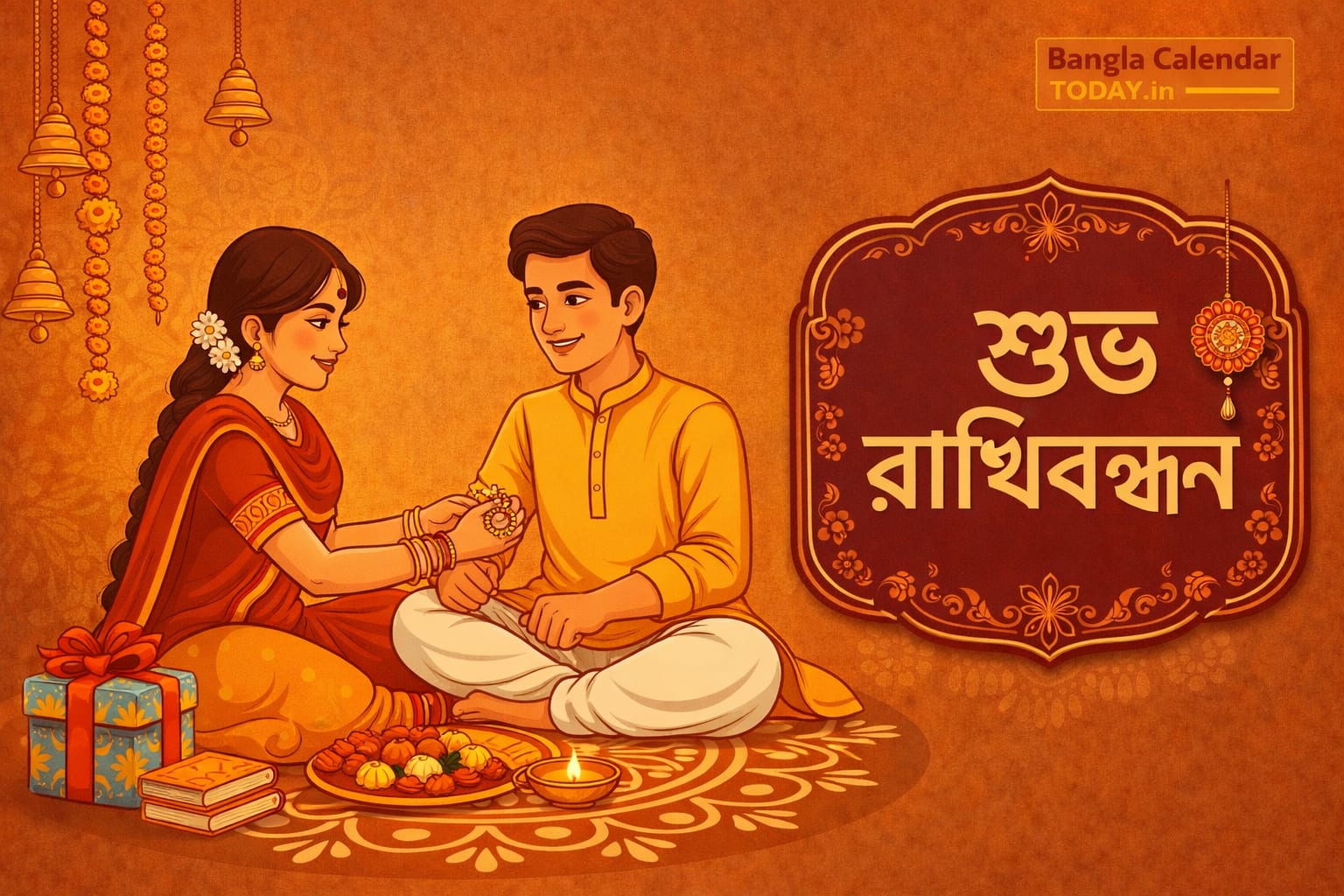
Raksha Bandhan, popularly known as Rakhi Purnima across Bengal, is one of the most beloved festivals celebrating the unbreakable bond between brothers and sisters. On this auspicious full moon day of the Shravana month (Shravana Purnima), sisters tie a sacred thread called 'Rakhi' on their brothers' wrists, pray for their health, prosperity, and long life, and receive gifts and a promise of lifelong protection in return.
In Bengal, Rakhi Purnima carries a profound cultural and historical dimension that sets it apart. Beyond the traditional sibling bond, Bengalis remember Rabindranath Tagore's historic call during the 1905 Partition of Bengal. Tagore transformed Raksha Bandhan into a grand festival of universal brotherhood ('Rakhi Mahotsav'), where people tied rakhis on each other's wrists regardless of religion or caste to protest against division and express solidarity.
One of the most famous Vedic legends comes from the Bhavishya Purana: during a celestial war between Devas and Asuras, Lord Indra's wife Sachi (Indrani) tied a sacred cotton thread blessed by Lord Vishnu around Indra's wrist. Powered by the thread, Indra defeated the demons. In ancient times, Raksha Sutra was tied not just by sisters to brothers, but by wives, mothers, or priests to protect warriors heading into battle.
In Bengali history, the festival took on an immortal national legacy in 1905. When Lord Curzon announced the Partition of Bengal to divide Hindus and Muslims, Nobel laureate Rabindranath Tagore organized a massive 'Rakhi Mahotsav' in Kolkata. Thousands of people marched to the Ganga ghats, sang patriotic songs composed by Tagore (such as 'Banglar Mati Banglar Jol'), and tied colorful threads on each other's wrists. Raksha Bandhan became a symbol of unity, freedom, and cultural pride that remains deeply cherished in Bengal to this day.
According to Hindu Panchang and Bengali Panjika, it is crucial to avoid tying Rakhi during 'Bhadra Kaal' — an inauspicious astrological period. The best time for Raksha Bandhan rituals is during Aparahna (afternoon) or Pradosh (early evening) when Bhadra has ended.
For Bengali households, the day starts early with a morning bath, wearing new traditional clothes (saris and dhoti-kurta or Punjabi), preparing the Rakhi Thali with Roli, Akshat (rice), Diya, Sandesh, and Rakhi threads. The ritual ends with family feasts, exchange of sweets, and heartfelt blessings.
Rituals & How to Celebrate
Traditional Foods & Bhog
Festival Calendar
Raksha Bandhan (Rakhi Purnima)
১৩ ভাদ্র • রাখিবন্ধন ২০২৬