Lakshmi Puja 2026(কোজাগরী লক্ষ্মী পূজা ২০২৬)
Kojagari Lakshmi Puja1433 Bengali Panjika • Verified Dates & Timings
Looking for calendar views and tithis?
Read more about the exact tithi timings and planetary alignments in our comprehensive October 2026 Calendar.
About Lakshmi Puja (Kojagari Lakshmi Puja)
উৎসব পরিচিতি
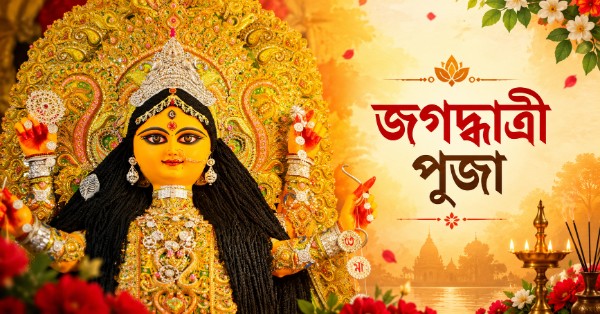
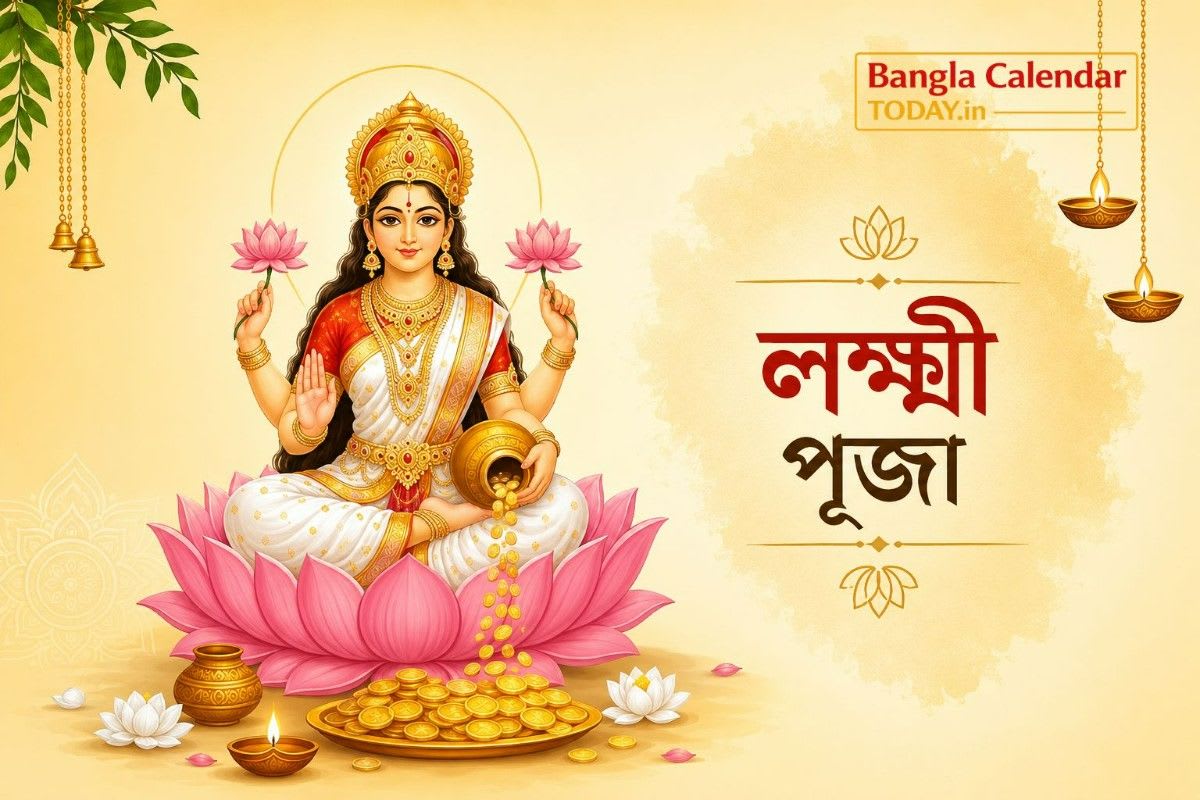
Kojagari Lakshmi Puja 2026 (কোজাগরী লক্ষ্মী পূজা ২০২৬) will be celebrated on Sunday, October 25, 2026 (corresponding to 9 Kartik 1433 Bangabda in the Bengali Panjika). Celebrated on the luminous full moon night (Purnima) immediately following Durga Puja, it is one of the most beloved and visually enchanting domestic festivals celebrated in every Bengali household across West Bengal, Tripura, Assam, and Bangladesh.
The word Kojagari is derived from the ancient Sanskrit query 'Ko Jagarti?'—meaning 'Who is awake?'. According to sacred belief, Goddess Lakshmi, the divine consort of Lord Vishnu and the bestower of wealth, fortune, and agricultural bounty, descends from heaven on this full moon night to visit the Earth. She walks through neighborhoods, showering perpetual abundance and peace upon households whose members remain awake, devout, and engaged in her worship.
In preparation for the Mother's arrival, women in every Bengali household paint intricate Alpona (sacred rice-paste motifs) across doorsteps, courtyards, and puja altars. Central to these designs are the sacred footsteps (Choroner Chhap) of Maa Lakshmi leading from the outer street directly into the inner sanctum of the home, alongside miniature sheaves of golden paddy (Dhaner Shis) and lotus blossoms. The air is perfumed with fresh incense, bubbling pots of Bhoger Khichuri, and the sweet aroma of freshly rolled Narkel Naru and roasted Til Moa.
History:
The origins of Kojagari Lakshmi Puja lie in the ancient agrarian prosperity of Bengal, rooted in the Sanatkumara Samhita, Skanda Purana, and local Bengali folk texts like the Lakshmi Panchali. Traditionally, the post-monsoon autumn full moon signaled the ripening of the auspicious Aman paddy crop. Farmers regarded the harvest as Goddess Lakshmi herself (Dhanya Lakshmi), welcoming her into granaries to ensure famine-free years.
A famous legend in the Lakshmi Panchali recounts a pious but impoverished merchant family whose fortunes were utterly transformed after the dutiful daughter-in-law observed the Kojagari Vrata with complete purity, lighting lamps on the full moon night when the Goddess descended. When King Vikramaditya or the local monarch inquired about the sudden prosperity, the merchant revealed the unmatched power of Mother Lakshmi's grace.
Historically across Bengal's zamindaris and rural hamlets, Kojagari Lakshmi Puja is performed without a Brahmin priest in many families; the eldest woman (Ginny) of the household recites the rhythmic Lakshmi Panchali aloud while family members listen reverently, holding flowers and holy grass. In East Bengali (Bangal) tradition, the idol of Lakshmi is worshipped as 'Sara' (a convex earthenware disc painted with vibrant icons of Lakshmi, owl, and paddy), whereas West Bengali (Ghoti) families traditionally worship clay idols accompanied by the white owl (Pechha), her divine mount.
Auspicious 2026 Timings & Tithi Nirghanta (সূর্যসিদ্ধান্ত ও বিশুদ্ধ পঞ্জিকা):
- Date: Sunday, October 25, 2026 (বাংলা ৯ কার্তিক ১৪৩৩ বঙ্গাব্দ)
- Kojagari Purnima Tithi Begins: Saturday night / Sunday early dawn
- Purnima Tithi Concludes: Sunday late night
- Nishita Kal Lakshmi Puja Window: 11:38 PM to 12:28 AM IST (Ideal nocturnal vigil window for Kojagari)
- Evening Puja Muhurat: 05:22 PM to 08:45 PM IST (Pradosh Kal)
- Public Holiday Status: Official Gazetted Public Holiday across West Bengal, Tripura, and Assam.
The Spiritual Essence of Kojagari:
Kojagari is fundamentally a lesson in vigilance, purity, and spiritual wakefulness. The night encourages devotees not merely to stay awake physically, but to awaken the intellect, guard against laziness (Alakshmi), and maintain an honest livelihood. Lighting lamps inside and outside the house symbolizes dispelling poverty and inviting enlightenment.
Traditional Panchali Reading & Domestic Rituals:
The heart of the festival is the chanting of the Lakshmi Panchali with folded hands, holding durva grass and cowrie shells (Kori). The Goddess is offered five varieties of seasonal fruits, roasted muri (puffed rice), and special homemade sweets made with freshly harvested sugarcane jaggery.
Rituals & How to Celebrate
Intricate Alpona Painting — Using liquid rice flour paste (pituli), women paint exquisite footsteps of Goddess Lakshmi leading from the main doorway to the altar, adorned with lotus flowers and paddy motifs.
Consecration of the Lakshmi Idol / Sara — Placing the clay murti or traditional hand-painted terracotta Sara on a raised platform wrapped in fresh red or yellow silk cloth, surrounded by golden paddy stalks.
Evening Lakshmi Puja & Dhyana — Offering water from a conch shell (Shankha), fresh sandalwood, fragrant flowers, and lighting pure ghee lamps at dusk (Pradosh Kal) amidst blowing conch shells.
Chanting the Lakshmi Panchali — The family gathers in a circle to listen to the rhythmic recitation of the sacred Lakshmi Panchali, holding sacred durva grass and yellow marigold petals.
Offering of Narkel Naru & Til Moa — Dedicating traditional homemade sweet delicacies, including white sugar coconut laddoos, gur naru, muri moa, chire moa, and batasha to the Goddess.
The All-Night Vigil (Kojagari Jagaran) — Devotees keep a continuous oil lamp burning throughout the night, playing games, singing devotional hymns, and keeping vigil to welcome the Mother.
Traditional Foods & Bhog
Bhoger Khichuri & Labra — Aromatic Gobindobhog rice khichuri paired with traditional nine-vegetable Labra curry cooked with ginger, cumin, and ghee without onion or garlic.
Narkel Naru (Gurer & Chinir) — Classic homemade coconut laddoos made with sticky date-palm jaggery and pure white sugar, spiced with aromatic green cardamom.
Muri Moa & Chire Moa — Crunchy puffed-rice and flattened-rice roundels bound together with molten aromatic jaggery and roasted sesame seeds (Til).
Taaler Kheer & Payesh — Rich condensed milk pudding slow-simmered with fragrant rice or ripe sugar-palm pulp, garnished with cashews and raisins.
Luchi & Alur Dum — Hot, puffed golden puris served alongside rich tomato-and-ginger spiced baby potato curry.
Sandesh & Motichoor Ladoo — Traditional Bengali sweet cottage cheese sandesh and saffron-flavored motichoor ladoos offered as mahaprasad.
Festival Calendar
Oct25
Kojagari Lakshmi Puja
৯ কার্তিক • কোজাগরী লক্ষ্মী পূজা ২০২৬
Sun
Related Festivals
Explore more key pujas & festive dates
Frequently Asked Questions
Quick Info
FestivalLakshmi Puja (Kojagari Lakshmi Puja)
Date25 October 2026
DaySunday
Tithiদশমী
Bangla Date৯ কার্তিক ১৪৩৩
Pakshaশুক্লপক্ষ
Panjika Details
Sunrise5:50 AM
Sunset5:15 PM
Nakshatraবিশাখা
Yogaপ্রীতি
Karanaনাগ